
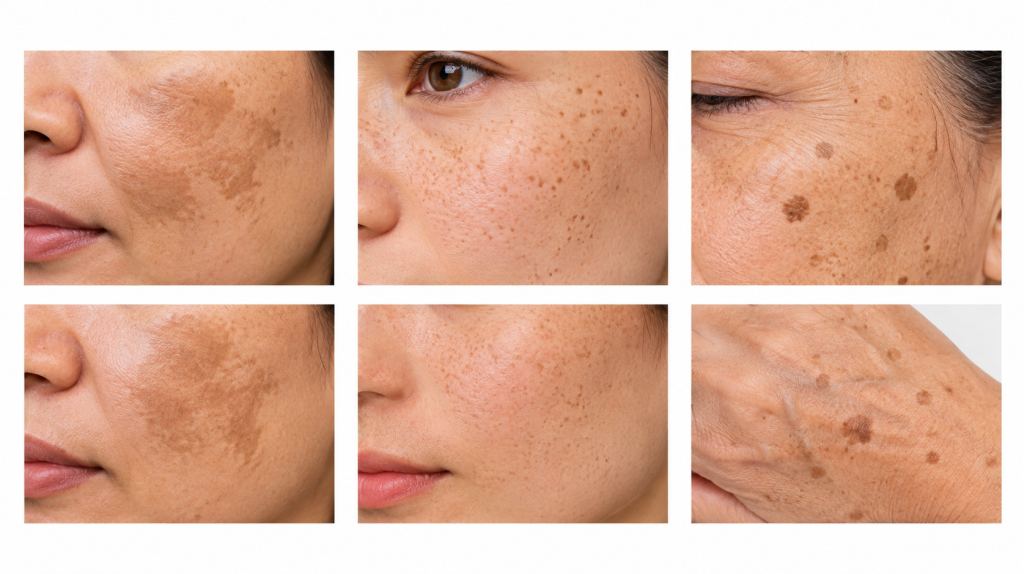
Many patients come in feeling unsure and frustrated because what looks like “just dark spots” isn’t fading despite using over-the-counter medication or skincare.You may have tried treatments before, or been given different explanations, only to find the results inconsistent or short-lived.
As Dr. Zalikha Ruslan, Medical Director of The M∙A∙C∙Clinic Publika and LCP-Certified by the Ministry of Health Malaysia, often sees, pigmentation can look similar on the surface while behaving very differently underneath.
What type of pigmentation is it?
Is it melasma, freckles, sun damage or something else?
Why can the same treatment produce very different results?
What is hyperpigmentation?
Hyperpigmentation is a broad term for areas of skin that appear darker than the surrounding skin. It can develop through different processes, including hormonal influences, age, cumulative sun exposure, inflammation and genetic tendency.
Melasma
Usually appears as symmetrical brown or grey-brown patches, commonly on the cheeks, forehead and upper lip. Hormonal influences and exposure to UV and visible light can contribute, and melasma is well known for its tendency to recur.
Sun or age spots
Also called solar lentigines, these are usually individual, well-defined brown spots associated with cumulative sun exposure over time.
Post-inflammatory hyperpigmentation
Dark marks that develop after inflammation, such as acne, skin irritation or certain procedures.
Freckles and genetic pigmentation
Some pigmentation is strongly influenced by genetics and may become more noticeable with sun exposure.
So, “pigmentation” is a description, not a diagnosis.
Why Diagnosis Matters
Two brown areas may look similar but behave very differently.
An experienced medical physician expert considers the pattern, history, skin type, triggers and previous treatments before recommending an appropriate treatment approach.
There is another important reason not to assume every brown spot is simply pigmentation: some pigmented lesions, including lentigo maligna, can resemble a freckle or solar lentigo. Clinical assessment and, when appropriate, dermoscopy can help distinguish suspicious lesions from benign pigmentation.
But diagnosis is only the beginning.
Choosing the right treatment, and the right protocol, matters just as much.
The technology, treatment settings, intervals between sessions, combination of treatments and maintenance plan all need to make sense for the individual skin.
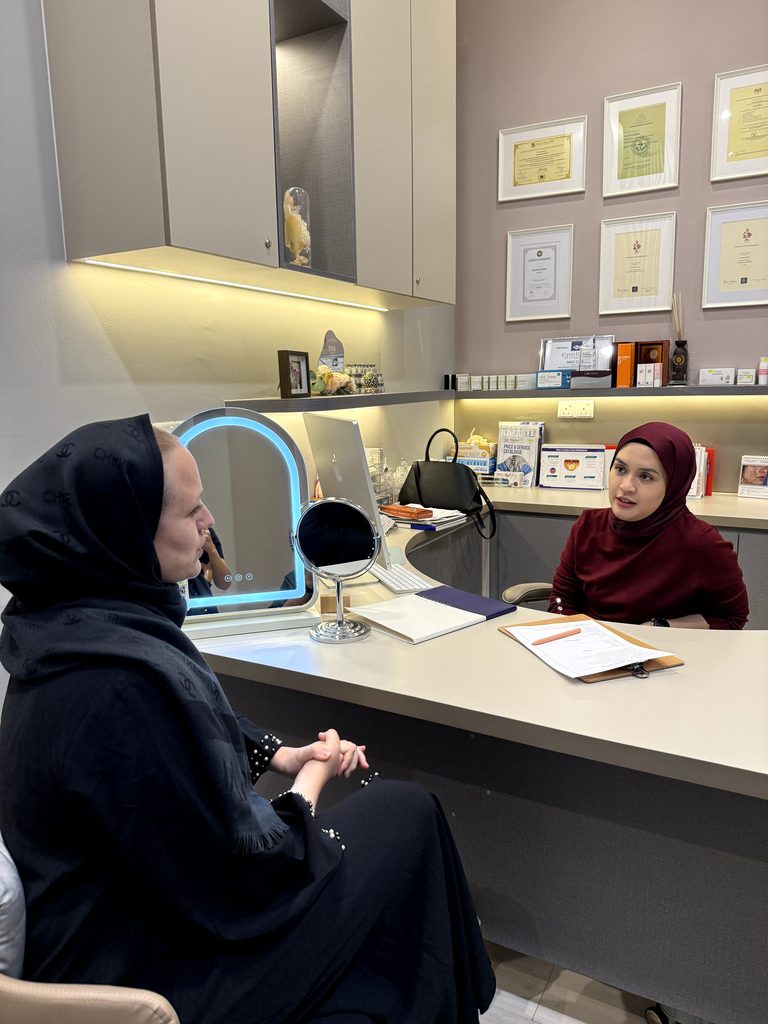
At The M∙A∙C∙Clinic
We take a doctor-led approach:
Understand → Assess → Plan → Treat → Review
Depending on the individual assessment, different approaches may be considered, including laser and energy-based treatments, injectables, topical or oral skincare, chemical peels and other procedures.
The appropriate approach may be one treatment or a combination.
Because a good skin journey is not a recipe you can find online.
It starts with understanding your skin, then choosing what is right for you.
The M∙A∙C∙Clinic
Ethical Aesthetic Since 1996
WhatsApp/ message: +60 182292122 ( The M∙A∙C∙Clinic Publika)
Email: mac.clinic.my@gmail.com
Original Article: The M∙A∙C∙Clinic blog
Author: Dr. Zalikha Ruslan
Published Date:5.10.2026